
Restaurant terminology, often compiled into a PDF, establishes a shared understanding within the industry, encompassing roles, services, and culinary practices.
This specialized vocabulary, sourced from dictionaries and industry glossaries, facilitates clear communication between staff and enhances the dining experience.
A comprehensive restaurant terminology PDF serves as a valuable resource for training, standardization, and efficient operations within hospitality establishments.
The Importance of a Common Restaurant Language
Establishing a unified restaurant language, often documented in a readily accessible PDF format, is paramount for operational efficiency and seamless service. Without a shared understanding of terms, miscommunication can easily occur, leading to errors in orders, food preparation, and ultimately, customer dissatisfaction.
A standardized terminology ensures that all staff – from front-of-house servers to back-of-house kitchen personnel – are on the same page. This clarity is especially crucial during peak service hours when quick and accurate communication is essential. The PDF acts as a central reference point, minimizing ambiguity and fostering a collaborative work environment.
Furthermore, consistent terminology improves training processes for new hires, accelerating their integration into the team. It also facilitates clear communication with vendors and suppliers, streamlining procurement and inventory management. Ultimately, a common language, easily accessed through a restaurant terminology PDF, translates to improved service quality and increased profitability.
Scope of the Terminology – Front & Back of House
A comprehensive restaurant terminology PDF encompasses a broad spectrum of terms, distinctly categorized for both Front of House (FOH) and Back of House (BOH) operations. FOH terminology focuses on customer service, order taking, table management, and dining room procedures – including phrases servers use and service styles like American or French.
Conversely, BOH terminology centers around culinary techniques, food preparation, kitchen station setup (mise en place), and food safety protocols. This includes cooking methods, ingredient descriptions, and plating presentation. The PDF clarifies specialized kitchen jargon, ensuring efficient communication amongst chefs and cooks.
Effective terminology bridges the gap between these two areas, enabling seamless order transmission and accurate food delivery. A well-structured PDF will define terms relevant to both FOH and BOH, promoting a unified understanding of the entire restaurant process, from order placement to final service.
Purpose of a Restaurant Terminology PDF
The primary purpose of a restaurant terminology PDF is to establish a standardized language within the hospitality environment, fostering clear communication and minimizing misunderstandings. This document serves as a crucial training tool for new hires, quickly onboarding them with essential industry-specific vocabulary.
A well-defined PDF enhances operational efficiency by ensuring all staff – from servers to chefs – understand common terms related to orders, food preparation, and service procedures. It acts as a readily accessible reference guide, resolving ambiguity and promoting consistency in service standards.
Furthermore, a terminology PDF supports professional development and facilitates a more cohesive team dynamic; It’s a valuable resource for maintaining quality control and delivering a superior dining experience, ultimately contributing to customer satisfaction and restaurant success.

Core Restaurant Roles & Responsibilities
Restaurant roles, detailed in a terminology PDF, span front and back of house, each with specific duties and a unique lexicon for efficient operation.
Front of House (FOH) Positions
A restaurant terminology PDF meticulously outlines Front of House (FOH) positions, crucial for guest experience. The Host/Hostess manages seating, utilizing terms like “reservation,” “waitlist,” and “table turn.” Servers, central to service, employ phrases for order taking, specials descriptions, and handling requests – “86’d” signifies an unavailable item.
Bartenders require specific vocabulary for cocktails, liquors, and service styles. Bussers clear tables, understanding terms for table settings and cleanliness. Managers oversee FOH operations, utilizing terms related to staffing, customer service, and problem resolution. Understanding these roles and associated terminology, as detailed in the PDF, ensures seamless service and effective communication, ultimately enhancing the diner’s satisfaction and the restaurant’s efficiency.
These positions demand a shared language for optimal performance.
Back of House (BOH) Positions
A comprehensive restaurant terminology PDF details Back of House (BOH) roles, vital for food preparation and kitchen efficiency. The Chef, or Head Cook, utilizes culinary terms for cooking methods – “sauté,” “braise,” “grill” – and ingredient descriptions. Line Cooks execute recipes, understanding “mise en place” (everything in its place) and station setup.
The Sous Chef assists the Chef, requiring a broad culinary vocabulary. Dishwashers maintain sanitation, understanding terms for cleaning and hygiene. Pastry Chefs specialize in desserts, employing baking-specific terminology. A restaurant terminology PDF clarifies food safety terms like “cross-contamination” and “holding temperatures.”
Effective BOH communication, facilitated by this shared vocabulary, ensures consistent food quality and a safe, organized kitchen environment, crucial for successful restaurant operations.

Management & Support Staff Terminology
A detailed restaurant terminology PDF outlines terms for Management & Support Staff, essential for smooth operations. The General Manager oversees all aspects, utilizing terms related to inventory management and cost control. An Assistant Manager supports daily tasks, understanding POS (Point of Sale) system terminology – “void,” “comp,” “split.”
Restaurant terminology includes jargon like “in the weeds” (overwhelmed) and “86’d” (item unavailable). Host/Hostess roles require understanding reservation systems and seating arrangements. Bartenders utilize drink-specific vocabulary and legal compliance terms. The restaurant terminology PDF also defines terms for handling complaints and returns.
Effective communication, using this shared lexicon, ensures efficient workflow, accurate financial tracking, and positive customer interactions, vital for restaurant success.
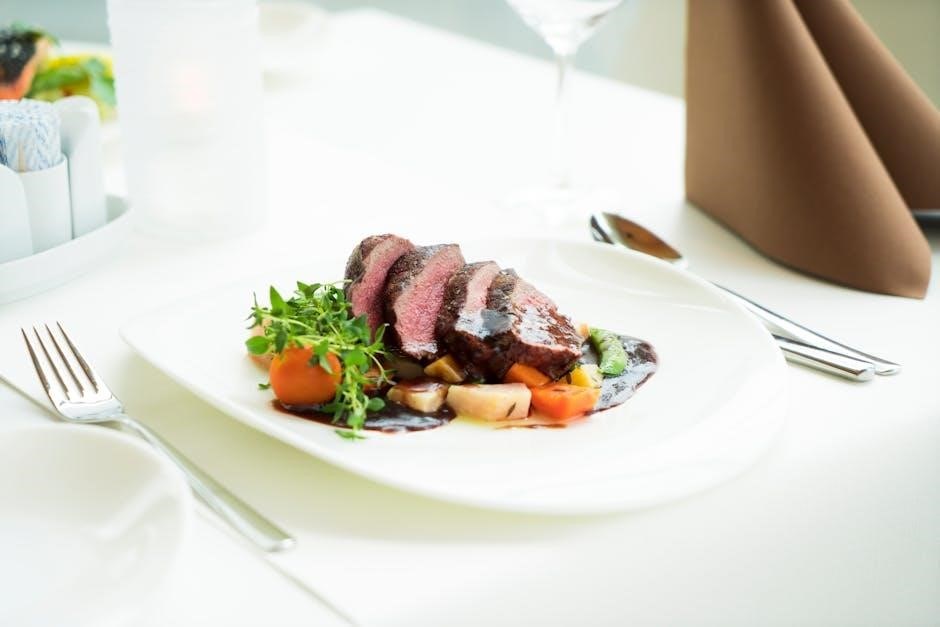
Menu Terminology – Describing Food
A restaurant terminology PDF details culinary language, covering cooking methods, ingredient descriptions, and menu sections—appetizers, entrees, and desserts—for clarity.
Cooking Methods & Techniques
A detailed restaurant terminology PDF meticulously outlines various cooking methods and techniques crucial for both kitchen staff and menu comprehension.
Terms like “sauté” (quickly frying in a small amount of fat), “braise” (slowly cooking in liquid), “poach” (cooking gently in liquid), and “grill” (cooking over direct heat) are fundamental.
Further clarification extends to techniques such as “deglaze” (loosening browned food residue from a pan with liquid), “reduce” (thickening a sauce by simmering), and “emulsify” (combining liquids that typically don’t mix).
Understanding these terms ensures consistent food preparation and accurate menu descriptions, enhancing the overall dining experience and minimizing miscommunication within the kitchen.
The PDF often includes explanations of heat levels (low, medium, high) and associated cooking times, providing a comprehensive guide for culinary professionals.
Ingredient Descriptions & Qualities
A comprehensive restaurant terminology PDF dedicates significant attention to ingredient descriptions and their associated qualities, vital for accurate menu representation and staff knowledge.
Terms defining freshness – “farm-to-table,” “seasonal,” “locally sourced” – are clearly explained, alongside quality indicators like “prime” (for cuts of meat) and “organic” (grown without pesticides).
The PDF details characteristics of various produce, specifying ripeness levels (e.g., “firm-ripe” for avocados) and flavor profiles (e;g., “tart” for Granny Smith apples).
Descriptions extend to seafood, outlining freshness cues and classifications (e.g., “sushi-grade”).
Understanding these nuances allows chefs to select optimal ingredients and servers to confidently answer customer inquiries, ensuring transparency and enhancing the perceived value of each dish.
Precise terminology builds trust and elevates the dining experience.
Menu Sections – Appetizers, Entrees, Desserts
A detailed restaurant terminology PDF thoroughly defines standard menu sections, ensuring consistent understanding across all staff members.
“Appetizers” (or starters) are clearly identified as smaller portions intended to stimulate the appetite, with terms like “mezze” or “hors d’oeuvres” explained.
“Entrees” (main courses) are defined as the primary dish of a meal, often categorized by protein (beef, poultry, seafood, vegetarian).
The PDF clarifies distinctions between “plat du jour” (dish of the day) and standard entree offerings.
“Desserts” are presented as sweet courses concluding the meal, encompassing items like pastries, ice cream, and fruit.
Additional sections, such as soups, salads, and sides, are also defined, alongside terms like “a la carte” (priced individually) versus “table d’hôte” (fixed price meal).
This standardized vocabulary promotes accurate order-taking and menu navigation.

Ordering & Service Terminology
A restaurant terminology PDF details phrases for ordering, special requests, and various service styles—American, French—ensuring smooth interactions.
Common server phrases are included.
Taking Orders & Special Requests
A detailed restaurant terminology PDF comprehensively covers the nuances of taking orders and accommodating special requests, vital for excellent customer service.
Key terms include understanding how to accurately record orders, clarifying modifications (“no onions,” “dressing on the side”), and noting dietary restrictions or allergies.
The PDF will define phrases servers use to confirm orders (“Anything else for you?”), suggest pairings, and handle complex requests with professionalism.
It also explains how to communicate effectively with the kitchen regarding special instructions, ensuring accurate food preparation.
Understanding terms like “modifications,” “substitutions,” and “upselling” are crucial.
Furthermore, the document clarifies procedures for handling requests for items not explicitly on the menu, or for customized preparations, promoting flexibility and customer satisfaction.
Proper terminology ensures clarity and minimizes errors in the order fulfillment process.
Table Service Styles (e.g., American, French)
A robust restaurant terminology PDF meticulously details various table service styles, essential for staff training and consistent service delivery.
It defines “American service,” characterized by plate service where food is pre-portioned in the kitchen and brought to the table.
Conversely, “French service” – often more formal – involves tableside preparation and presentation by the server, requiring specialized skills.
The PDF clarifies “Russian service” (platter service) and “English service” (family-style), outlining their respective procedures and etiquette.
Understanding terms like “guerridon” (a movable trolley for tableside service) and “tray passing” is vital.
It also explains the roles and responsibilities of servers within each style, including order taking, food delivery, and table maintenance.
The document ensures all staff comprehend the nuances of each service style, contributing to a seamless and refined dining experience for guests.
Common Phrases Used by Servers
A comprehensive restaurant terminology PDF includes a vital section dedicated to common phrases utilized by servers during guest interactions.
It details standard greetings like “Welcome to [Restaurant Name], how may I assist you?” and polite inquiries about dietary restrictions or allergies.
The PDF defines phrases for suggesting menu items, such as “May I recommend our daily special?” or “Our [dish] is very popular.”
It also covers phrases for handling requests: “Certainly, I’ll check with the kitchen,” or “I’ll bring that right out for you.”
Crucially, it includes phrases for addressing issues: “I apologize for the inconvenience,” or “Let me get a manager for you.”
Understanding terms like “86’d” (item unavailable) and how to communicate this politely is essential.
This section ensures consistent, professional communication, enhancing guest satisfaction and overall service quality within the establishment.

Kitchen Terminology – Food Preparation
A restaurant terminology PDF details crucial kitchen terms, including “mise en place,” station setup, and food safety protocols for efficient preparation.
It defines techniques and standards.
Mise en Place & Station Setup
A comprehensive restaurant terminology PDF dedicates significant attention to “Mise en Place,” a French term meaning “everything in its place.” This foundational concept embodies the meticulous preparation undertaken before service begins.
The PDF clarifies that mise en place extends beyond simply chopping vegetables; it encompasses portioning ingredients, preparing sauces, marinating meats, and ensuring all necessary tools are readily available.
Regarding station setup, the document details the organized arrangement of workstations – grill, sauté, pantry, etc. – to maximize efficiency and minimize movement during peak hours. It defines proper placement of frequently used items, sanitation procedures for each station, and the importance of maintaining a clean and organized workspace.
The terminology PDF also explains how standardized mise en place lists and station checklists contribute to consistency in food quality and service speed, ultimately enhancing the overall dining experience.
Food Safety & Handling Terms
A detailed restaurant terminology PDF prioritizes Food Safety & Handling Terms, crucial for preventing foodborne illnesses and maintaining public health. It defines “cross-contamination,” explaining the transfer of harmful bacteria between foods, surfaces, or equipment.
The PDF clarifies “temperature danger zone” (40°F ⎼ 140°F / 4°C ⎼ 60°C), emphasizing the rapid bacterial growth within this range. It details proper cooking temperatures for various proteins, utilizing terms like “safe internal temperature.”

Key terms like “FIFO” (First In, First Out) are explained as inventory rotation methods, ensuring older products are used before newer ones. The document also defines “HACCP” (Hazard Analysis and Critical Control Points), a systematic preventative approach to food safety.
Furthermore, the terminology PDF outlines proper handwashing procedures, sanitation protocols, and the importance of reporting food safety concerns, reinforcing a culture of safety within the restaurant.
Plating & Presentation Terminology
A comprehensive restaurant terminology PDF dedicates a section to “Plating & Presentation Terminology,” recognizing its impact on the diner’s experience. It defines “garnish,” detailing edible decorations enhancing visual appeal and flavor.
The PDF explains “plating” as the artful arrangement of food on a plate, emphasizing balance, color, and texture. Terms like “napage” (sauce around the food) and “mirror glaze” (shiny coating) are clarified, alongside techniques like “stacking” and “swirls.”
It defines “portion control,” ensuring consistent serving sizes and visual appeal. The document also details “molecular gastronomy” techniques, involving innovative food presentations.

Furthermore, the terminology PDF covers terms like “brunoise” (tiny dice cuts) and “julienne” (matchstick cuts), relating to ingredient preparation for visual effect, ultimately elevating the dining experience through artistic food presentation.

Restaurant Operations & Management Terms
Restaurant terminology PDFs detail crucial operational aspects like inventory management, cost control, and POS system functions for efficient business practices.
Understanding industry jargon and slang, as outlined in these resources, is vital for seamless communication and effective leadership.
Inventory Management & Cost Control
Restaurant terminology PDFs dedicate significant sections to inventory management, defining terms like “par stock” – the ideal quantity of each item to have on hand – and “FIFO” (First-In, First-Out), a crucial method for stock rotation to minimize waste.
Key terms related to cost control include “food cost percentage,” calculated by dividing the cost of goods sold by revenue, and “prime cost,” encompassing both food and labor costs. Understanding “yield percentage,” the amount of usable product remaining after trimming, is also vital.
These documents often explain concepts like “standardized recipes” to ensure consistent portion sizes and ingredient usage, directly impacting cost control. Terms like “variance analysis” – comparing actual costs to budgeted costs – are also defined, enabling managers to identify and address discrepancies. A well-defined terminology PDF empowers staff to contribute to efficient resource allocation and profitability.
Point of Sale (POS) System Terminology
Restaurant terminology PDFs extensively cover Point of Sale (POS) systems, defining terms like “ticket” or “check” – the bill presented to the customer – and “cover,” representing a seated diner. Understanding “modifications” or “mods” – alterations to menu items – is crucial for accurate order entry.
Key terms include “split check,” dividing a bill among multiple payers, and “fire station” – the printer station in the kitchen receiving orders. A “comp” refers to a complimentary item or discount applied to a check.
These resources explain “table management” features within the POS, and terms like “server station” – the designated area for a server to manage their tables. A terminology PDF clarifies functions like “voiding” an item (canceling it from the order) and running “end-of-day” reports for financial reconciliation, ensuring smooth operations and accurate data analysis.
Restaurant Industry Jargon & Slang
Restaurant terminology PDFs often include a section dedicated to industry-specific jargon and slang, enriching understanding beyond formal definitions. Terms like “in the weeds” – meaning overwhelmed with orders – and “86’d” – indicating an item is unavailable – are commonly explained.
A “piece of the action” refers to a share of the profits, while “on the fly” signifies doing something immediately. Understanding “MIA” – missing in action, often referring to a staff member – is vital for efficient communication.
These PDF resources decode phrases like “cornered” – a server being too busy, and “running low” – indicating dwindling supplies. They also clarify the meaning of “no-show,” a customer who doesn’t appear for a reservation, and “walk-in,” a customer without a reservation. Mastering this slang fosters camaraderie and efficient workflow within the restaurant environment.

Dealing with Issues & Customer Service
Restaurant terminology PDFs detail handling complaints, returns, and dietary needs; defining terms like “86’d” for unavailable items and allergy protocols.
Effective communication ensures positive resolutions.
Handling Complaints & Returns
Restaurant terminology PDFs dedicate sections to effectively managing customer dissatisfaction, outlining specific phrases and procedures for addressing complaints and processing returns.
Key terms include “comping” a meal – removing the charge as a gesture of goodwill – and understanding the nuances of offering a “refund” versus a “replacement” dish.
These documents often emphasize the importance of active listening, empathy, and a sincere apology when addressing concerns.
Furthermore, they detail protocols for documenting complaints to identify recurring issues and improve service quality.
A well-defined process, communicated through the PDF, empowers staff to resolve problems efficiently and maintain positive customer relationships, even in challenging situations.
Understanding terms like “service recovery” – actions taken to rectify a negative experience – is crucial for turning dissatisfied customers into loyal patrons.
86’d Items & Menu Availability
Restaurant terminology PDFs prominently feature the term “86’d,” a code indicating an item is unavailable, often due to being sold out or ingredient shortages.
Understanding this jargon is vital for front-of-house staff to accurately inform customers and suggest alternatives, preventing disappointment.
Related terms include “out of stock,” “unavailable,” and the proactive practice of “menuing” – clearly displaying available items.
These resources emphasize the importance of consistent communication between the kitchen and service staff regarding menu changes.
A comprehensive PDF will detail procedures for notifying servers about 86’d items and providing them with appropriate substitution suggestions.
Effective management of menu availability, guided by this terminology, minimizes customer frustration and maintains a positive dining experience, even when limitations exist.
Terms Related to Dietary Restrictions & Allergies
Restaurant terminology PDFs increasingly dedicate sections to dietary needs, reflecting growing customer awareness and legal requirements.
Key terms include “gluten-free,” “vegan,” “vegetarian,” “dairy-free,” and “nut-free,” alongside understanding common allergens like peanuts, shellfish, and soy.
These resources define “cross-contamination” – a critical food safety concern – and outline procedures to prevent it during preparation and service.
A robust PDF will also explain how to handle “special requests” related to allergies, emphasizing clear communication with the kitchen.
Terms like “modified dish” and “allergy alert” are crucial for accurate order taking and ensuring customer safety.
Staff training, supported by this terminology, is paramount in preventing allergic reactions and providing inclusive dining options for all patrons.