Ford Lightning Manual Transmission: A Comprehensive Overview
Ford Lightning enthusiasts often explore manual swaps, notably the Tremec T56, seeking enhanced control. The second-generation models benefit from Mustang Cobra applications, offering a thrilling driving experience.
Ford Lightning trucks, performance variants of the F-150, have historically featured automatic transmissions as standard equipment. However, a significant portion of the aftermarket community and dedicated owners have pursued manual transmission swaps, primarily utilizing the Tremec T56. This desire stems from a preference for greater driver control and a more engaging driving experience.
Original Lightnings (1993-1995 and 1999-2004) came exclusively with automatic options, while the modern electric version (2022-present) employs a unique single-speed transmission. Exploring these options, and the modifications involved, is crucial for Lightning owners and prospective buyers.

First Generation Ford Lightning (1993-1995) Transmissions
1993-1995 Lightnings utilized the 4R70W automatic transmission with 4-bolt converters, differing from later models and paving the way for swaps;
4R70W Automatic Transmission: Standard Configuration
The 4R70W served as the factory-standard automatic transmission for the initial Ford Lightning generation, spanning from 1993 to 1995. This four-speed automatic was chosen for its durability and ability to handle the increased power output compared to standard F-150s. However, it wasn’t without its limitations, prompting many owners to consider upgrades or manual transmission swaps for enhanced performance and reliability.
The 4R70W’s standard configuration included a torque converter designed to work with the Lightning’s specific engine characteristics. While robust, it was later superseded by stronger variants, particularly in subsequent Lightning generations, highlighting the ongoing pursuit of improved powertrain components.
Converter Differences: 93-95 vs. Later Models
Significant differences existed between the torque converters used in the early (1993-1995) Ford Lightning models and those found in the second-generation trucks. The initial Lightnings featured 4-bolt converters, while the later generations adopted the more robust V-10 converter, identifiable by its blue dot and 6-bolt design.
This upgrade to a 6-bolt converter substantially increased strength and durability, better suited for handling the higher horsepower and torque outputs of the newer Lightning engines. This change reflects Ford’s commitment to improving the powertrain’s overall reliability.
Second Generation Ford Lightning (1999-2004) Transmissions
Second-generation Lightnings utilized the 4R75W automatic transmission, a stronger unit than its predecessor. The V-10 converter with its 6-bolt design enhanced durability.
4R75W Automatic Transmission: Increased Strength
The 4R75W automatic transmission, featured in the 1999-2004 Ford Lightning, represented a significant upgrade in strength compared to the earlier 4R70W. This robust transmission was crucial for handling the increased horsepower and torque produced by the supercharged 5.4L Triton engine.
Its enhanced internal components, including stronger gears and a more durable torque converter, contributed to its improved reliability under demanding conditions. Owners frequently discuss its ability to withstand modifications, though upgrades are still recommended for substantial power increases. The 4R75W became a cornerstone of the Lightning’s performance capabilities.
V-10 Converter and 6-Bolt Design
The second-generation Ford Lightning (1999-2004) received a notable transmission upgrade: the V-10 converter. Originally designed for the heavier-duty V-10 engine, this converter offered increased strength and efficiency. Coupled with a 6-bolt bellhousing design, it provided a more secure and robust connection to the engine.
This combination significantly improved the transmission’s ability to handle the Lightning’s substantial power output. Forum discussions highlight the “blue dot” designation often associated with this converter, indicating its V-10 specification and enhanced durability for high-performance applications.
Manual Transmission Swaps in Ford Lightning
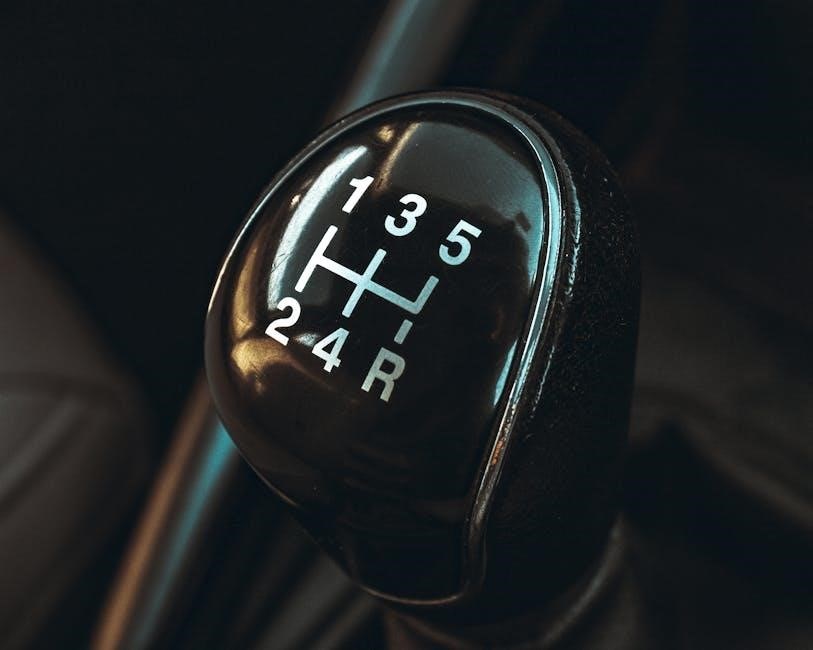
Tremec T56 transmissions are a popular choice for Ford Lightning owners desiring a manual setup, often sourced from Mustang Cobras for a direct fit.
Popular Manual Transmission Choices: Tremec T56
The Tremec T56 consistently emerges as the favored manual transmission for Ford Lightning conversions, lauded for its robust construction and readily available components. Many enthusiasts specifically source the T56 from 2004 Mustang Cobras, appreciating its compatibility and relatively straightforward installation process. This choice provides a significant upgrade in driver engagement and control, transforming the Lightning’s driving dynamics. Its strength allows it to handle increased horsepower levels often found in modified Lightnings. The aftermarket support for the T56 is extensive, offering various upgrades and customization options for optimal performance and reliability.
Tremec T56 Installation: Mustang Cobra Applications
Utilizing a Tremec T56 from a 2004 Mustang Cobra simplifies the installation process for Ford Lightning owners. This application benefits from pre-existing compatibility, reducing the need for extensive modifications. Key components like the bellhousing and clutch setup often align well with the Lightning’s engine. However, custom driveshafts and potentially transmission crossmembers are typically required to ensure proper fitment and functionality. Careful planning and attention to detail are crucial for a successful swap, ensuring optimal performance and long-term reliability.
Electric Ford Lightning (2022-Present) Transmission
Electric Lightnings uniquely employ a single-speed transmission, differing from traditional setups. This design maximizes efficiency and delivers instant torque for optimal EV performance.
Single-Speed Transmission: Unique EV Design
Electric vehicles, including the Ford Lightning, often utilize a single-speed transmission due to the characteristics of electric motors. Unlike internal combustion engines requiring multiple gears for varying speeds and torque, electric motors deliver peak torque instantly across a wide RPM range.
This eliminates the need for a multi-gear transmission, simplifying the drivetrain and increasing efficiency. The single-speed transmission provides a direct drive, maximizing power delivery and responsiveness. It contributes to the smooth, seamless acceleration that EVs are known for, offering a unique driving experience compared to traditional vehicles.
Rationale Behind Single-Speed Transmission in EVs
The Ford Lightning’s single-speed transmission isn’t a limitation, but a deliberate design choice leveraging the strengths of its electric powertrain. Electric motors generate maximum torque from zero RPM, negating the need for gear changes to optimize power delivery at different speeds.
This simplicity enhances efficiency, reduces weight, and lowers maintenance requirements. The direct-drive system provides instant responsiveness and smooth acceleration, characteristics highly valued in electric vehicles, offering a distinct advantage over multi-gear setups in traditional combustion engine trucks.
Transmission Fluid and Service
Lightning owners should replace transmission fluid as per the owner’s manual; filter replacement may also be applicable during service, ensuring optimal performance.
Automatic Transmission Fluid Replacement
Maintaining the correct automatic transmission fluid (ATF) level and condition is crucial for the longevity and smooth operation of your Ford Lightning’s transmission. Regular fluid changes help remove contaminants and ensure proper lubrication, preventing premature wear and tear on internal components.
The frequency of ATF replacement depends on driving conditions and usage, but generally, it’s recommended every 30,000 to 60,000 miles. Using the correct type of ATF, specified in your owner’s manual, is paramount. Incorrect fluid can lead to shifting problems and transmission failure.
Filter Replacement During Service
When performing an automatic transmission fluid replacement on your Ford Lightning, consider replacing the transmission filter simultaneously. The filter traps debris and contaminants, preventing them from circulating through the transmission. Over time, it can become clogged, restricting fluid flow and impacting performance;
Although some sources don’t specifically mention filter replacement, it’s a proactive maintenance step. Accessing the filter typically requires dropping the transmission pan. Ensure a proper seal when reinstalling the pan to prevent leaks. Using a new filter alongside fresh ATF maximizes the benefits of the service.

Powertrain Considerations for Lightning Modifications
Manual swaps demand careful powertrain evaluation, especially regarding increased horsepower handling. Older models might explore E40D compatibility, though strength is a key factor.
Handling Increased Horsepower with Manual Swaps
Successfully integrating a manual transmission into a Ford Lightning, particularly when boosting horsepower, requires meticulous attention to drivetrain components. The factory rear ends may struggle with significantly increased torque, necessitating upgrades like stronger axles, limited-slip differentials, and robust driveshafts.
Clutch selection is paramount; a high-performance clutch capable of withstanding the engine’s output is crucial. Furthermore, consider the transmission’s internal strength – the Tremec T56, while popular, has limitations. Proper tuning is essential to optimize power delivery and ensure the entire powertrain operates harmoniously under stress.
E40D Transmission Compatibility (Older Models)
For owners of first-generation Ford Lightnings (1993-1995) contemplating a powertrain swap, the E40D transmission presents a potential, though complex, compatibility path. While capable of handling increased horsepower with modifications, it wasn’t originally designed for the Lightning’s performance envelope.
Careful consideration must be given to the torque converter, ensuring it’s appropriately matched to the engine and transmission. Upgrading the E40D’s internal components, such as clutches and bands, is often necessary to ensure reliability under demanding conditions. Thorough research and professional installation are highly recommended.

Towing and Driving Modes
Electric Lightning owners inquire about flat towing capabilities for long distances behind motorhomes. The possibility of a rear-wheel drive mode is also under discussion.
Flat Towing Capabilities of the Electric Lightning
A significant question among Ford Lightning EV owners revolves around the feasibility of flat towing their trucks over extended distances, particularly behind recreational vehicles like motorhomes. This capability is crucial for those wanting to easily transport their Lightning while traveling. Current information suggests investigation is needed to determine if the single-speed transmission and associated systems allow for safe and reliable flat towing without causing damage. Owners are actively seeking clarification from Ford and sharing experiences within online forums to understand the limitations and potential modifications required for successful flat towing.
Potential for Rear-Wheel Drive Mode
Discussions within the Ford Lightning EV community frequently explore the possibility of a selectable rear-wheel drive mode. Owners desire this option to experience a more traditional driving feel and potentially unlock unique handling characteristics. Given the single-speed transmission design, enabling such a mode would likely require sophisticated software control to manage power delivery and traction. While currently unavailable, the potential for a future software update to introduce a rear-wheel drive option remains a popular request among enthusiasts seeking a more engaging driving experience.
Lightning Forum Discussions on Transmissions
Ford Lightning forums reveal common questions about manual swaps, troubleshooting, and the Tremec T56. Owners actively discuss compatibility and performance modifications.
Common Questions and Concerns from Owners
Ford Lightning owners frequently inquire about the feasibility and cost of manual transmission swaps, particularly regarding the Tremec T56. Concerns revolve around compatibility with existing powertrains and potential horsepower limitations. Discussions often center on finding suitable components, including clutch kits and flywheels, and the complexity of the installation process.
Many owners seek advice on tuning the powertrain control module (PCM) to properly manage the manual transmission. Reliability and long-term durability are also key concerns, with owners wanting to ensure the swapped transmission can withstand the truck’s power and intended use. Finding experienced installers is another common challenge.
Troubleshooting Transmission Issues
When addressing Ford Lightning manual transmission problems, owners often report difficulties with clutch engagement, shifting smoothness, and unusual noises. Diagnosing these issues requires careful inspection of the clutch disc, pressure plate, and throw-out bearing. Shifter linkage adjustments are frequently needed to ensure precise gear selection.
Internal transmission damage, though less common, can manifest as grinding gears or complete failure. Proper fluid levels and regular inspections are crucial for preventative maintenance. Owners should also verify the PCM tuning is optimized for the manual transmission setup to avoid operational problems.
Aftermarket Transmission Upgrades
Aftermarket solutions strengthen automatic transmissions, while custom manual setups provide enhanced durability for increased horsepower. These upgrades cater to performance modifications.
Strengthening Automatic Transmissions
For owners preferring to retain the automatic transmission, several aftermarket upgrades significantly enhance its durability and performance capabilities. These modifications are crucial when increasing engine horsepower, a common practice among Lightning enthusiasts. Upgrades often include high-performance clutch packs, reinforced planetary gearsets, and heavy-duty torque converters.
Additionally, improved transmission coolers are essential for managing the increased heat generated by higher output engines. Upgraded valve bodies can also refine shift points and firmness, contributing to a more responsive and reliable driving experience. These enhancements ensure the automatic transmission can withstand the demands of a modified Lightning.
Custom Manual Transmission Solutions
Beyond the popular Tremec T56 swap, dedicated enthusiasts explore fully custom manual transmission solutions tailored to their specific Ford Lightning builds. This often involves sourcing transmissions from other performance vehicles and adapting them to the Lightning’s drivetrain. Custom solutions require significant fabrication work, including modifying the transmission mount, driveshaft, and potentially the shifter assembly.
These builds prioritize achieving a unique gear ratio spread or utilizing a transmission capable of handling extreme power levels. Careful planning and expert execution are vital for a successful and reliable custom manual transmission conversion.

Transmission Control and Tuning
Manual transmission swaps demand precise tuning for optimal performance. Automatic transmission optimization involves adjusting shift points and torque management for enhanced responsiveness and efficiency.
Tuning for Manual Transmission Swaps
Successfully integrating a Tremec T56 or similar manual transmission into a Ford Lightning necessitates comprehensive tuning. This goes beyond simply connecting the hardware; it requires recalibrating the powertrain control module (PCM) to recognize and manage the new transmission’s parameters. Key areas of focus include adjusting vehicle speed sensor (VSS) output, ensuring accurate speedometer readings, and configuring proper shift patterns.
Furthermore, disabling torque management systems originally designed for the automatic transmission is crucial to unlock the full potential of the manual swap. Optimizing fuel maps and ignition timing to complement the manual transmission’s characteristics will deliver a more engaging and powerful driving experience. Custom tuning, often performed by specialists, is highly recommended.
Optimizing Automatic Transmission Performance
For Ford Lightning owners retaining the automatic transmission, performance enhancements are still achievable. Upgrading to a higher-stall torque converter, particularly the V-10 converter found in later second-generation models, can significantly improve acceleration. Strengthening the 4R75W with upgraded clutches and bands is vital when increasing horsepower.
Furthermore, a custom tune can refine shift points and firmness, optimizing the transmission’s behavior for performance or towing. Regular fluid and filter changes, utilizing the correct automatic transmission fluid, are essential for longevity and reliability, especially with modifications.

Future Transmission Developments
Electric Lightnings may see multi-speed transmissions evolve, enhancing efficiency and performance. Advanced technologies could offer unique driving dynamics, beyond the current single-speed setup.
Potential for Multi-Speed Transmissions in Electric Lightnings
Currently, the Electric Ford Lightning utilizes a single-speed transmission, a common characteristic of electric vehicles due to the instant torque delivery of electric motors. However, future iterations could benefit from multi-speed transmissions. These could optimize efficiency at various speeds, potentially extending range and improving overall performance.
While not immediately necessary, exploring advanced transmission technologies could unlock new levels of control and driving experience. Such developments might address concerns about maintaining optimal motor efficiency across a wider spectrum of driving conditions, mirroring the benefits seen in traditional multi-gear systems.
Exploring Advanced Transmission Technologies
Beyond multi-speed gearboxes, Ford Lightning development could investigate continuously variable transmissions (CVTs) tailored for electric powertrains. These offer seamless ratio adjustments, maximizing efficiency and responsiveness. Alternatively, dual-clutch transmissions (DCTs) could provide rapid shifts, enhancing performance for those desiring a more engaging driving experience.
Research into innovative e-axles, integrating the transmission and electric motor, presents another avenue. Such integration could reduce weight and improve packaging, contributing to overall vehicle efficiency and handling characteristics. These technologies represent potential future enhancements.
Resources for Ford Lightning Transmission Information
Ford truck forums and online communities, alongside technical service manuals, provide invaluable insights into Lightning transmissions and manual swap experiences for owners.
Ford Truck Forums and Online Communities
Ford Lightning forums, like F150online and the Ford Lightning Forum for the EV pickup, are crucial resources. Owners frequently discuss transmission questions, troubleshooting issues, and manual swap details. These platforms host threads detailing Tremec T56 installations and compatibility concerns.
Common questions revolve around converter differences between generations – the 93-95 models versus later versions with the V-10 converter and 6-bolt design. Experienced members share knowledge about handling increased horsepower after manual swaps and offer guidance on potential E40D compatibility.
Technical Service Manuals and Documentation
Detailed Ford technical service manuals are essential for understanding Lightning transmission specifics, particularly when undertaking manual swaps like installing a Tremec T56. These resources outline proper procedures for automatic transmission fluid replacement and filter servicing, as suggested in owner’s manuals.
Documentation clarifies converter differences between first and second-generation Lightnings, including the V-10 converter and 6-bolt designs. Manuals aid in diagnosing issues discussed on forums, offering insights into handling increased horsepower and ensuring compatibility with older models like those utilizing the E40D transmission.