
The Munich Security Conference: A Comprehensive Overview
The Munich Conference, historically linked to the 1938 Agreement, now focuses on contemporary security challenges. It’s a vital platform
for international dialogue.
Historical Origins and Evolution
The roots of the Munich Security Conference trace back to the fraught political climate of the 1938 Munich Agreement, a stark reminder of appeasement’s failures. However, the conference as we know it today didn’t emerge until the Cold War era. Initially, it served as an informal gathering for transatlantic policymakers to discuss pressing security concerns.
Post-World War II, the need for a consistent forum for dialogue became apparent. The conference gradually evolved, expanding its scope beyond purely military matters to encompass broader geopolitical issues. This evolution reflects the changing nature of security threats over the decades, adapting to new challenges like terrorism, cyber warfare, and great power competition.
The 1938 Munich Agreement: A Precursor
The 1938 Munich Agreement, involving Great Britain, France, Germany, and Italy, remains a historically significant, yet controversial event. It permitted Nazi Germany’s annexation of the Sudetenland region of Czechoslovakia, a decision made in the name of avoiding war. However, it ultimately failed to prevent a larger conflict, demonstrating the dangers of appeasement and the miscalculation of aggressive intentions.
While the modern Munich Security Conference isn’t directly a continuation of the 1938 meeting, the historical shadow looms large. It serves as a cautionary tale, emphasizing the importance of firm resolve and collective security in addressing international crises. The name itself acknowledges this past, prompting reflection on lessons learned.
Post-War Re-emergence and Focus
Following World War II, the Munich Conference was revived in 1950, initially as an informal gathering of European security experts. Its early focus centered on transatlantic relations and the emerging Cold War dynamics. The conference gradually evolved, becoming a crucial forum for discussing European security architecture and fostering dialogue between Western nations.
Over time, the scope broadened to encompass a wider range of global security challenges. The conference adapted to address new threats, including terrorism, proliferation of weapons, and regional conflicts. It solidified its role as a key platform for high-level discussions, shaping the security agenda and influencing policy decisions.
The Conference Format and Participants
The conference features plenary sessions, side events, and bilateral meetings. Governments, international organizations, NGOs, think tanks, and media representatives actively participate.
Core Participants: Governments and International Organizations
The Munich Security Conference prominently features high-level governmental representation, including heads of state and government, ministers of foreign affairs and defense, and parliamentary representatives from numerous nations. Participation extends beyond Europe, encompassing key actors from North America, Asia, Africa, and the Middle East.
International organizations also play a crucial role, with consistent involvement from the United Nations, the European Union, NATO, and the Organization for Security and Co-operation in Europe (OSCE). These entities contribute to discussions and often present their perspectives on pressing global security issues. The presence of these core participants ensures a broad and multifaceted dialogue on critical challenges facing the international community.
Key Stakeholders: NGOs, Think Tanks, and Media
Beyond governmental and intergovernmental actors, the Munich Security Conference actively engages a diverse range of non-state stakeholders. Numerous non-governmental organizations (NGOs) focused on peace, security, and human rights contribute valuable insights and perspectives to the discussions.
Leading think tanks and research institutions provide expert analysis and policy recommendations, enriching the debate with evidence-based research. The media plays a vital role, with extensive coverage from international news organizations ensuring broad dissemination of conference proceedings and key takeaways. This multi-stakeholder approach fosters a more comprehensive and informed dialogue on global security challenges.
The Role of the Munich Security Report
The Munich Security Report serves as a cornerstone of the annual conference, providing a comprehensive analysis of the most pressing global security issues. Released prior to the event, the report shapes the agenda and frames the discussions among participants.
It’s a product of extensive research and consultation, offering in-depth assessments of emerging threats, regional conflicts, and evolving geopolitical dynamics. The report doesn’t shy away from controversial topics, often presenting challenging perspectives and policy recommendations. Its influence extends beyond the conference, informing policy debates and shaping public discourse on security matters worldwide.
Key Themes and Discussions (2000s ⎯ Present)
Discussions evolved from post-Cold War security to address rising threats like terrorism, the Ukraine crisis, and cybersecurity. Putin’s 2007 speech marked a turning point.
Putin’s 2007 Speech: A Turning Point
Vladimir Putin’s address at the 2007 Munich Security Conference dramatically reshaped the discourse on international security. He critiqued what he portrayed as a unipolar world dominated by the United States, asserting that this model was inherently unstable and provoked resentment. Putin proposed “new rules of the game,” advocating for a more multipolar system with a balance of power.
His speech challenged the prevailing Western narrative, accusing the US of imposing its will on other nations and disregarding international law. It signaled a shift in Russia’s foreign policy, moving away from cooperation with the West towards a more assertive and independent stance. This moment is widely considered a pivotal point in the deterioration of relations between Russia and the West, foreshadowing future conflicts and tensions.
The Rise of ISIS and the Ukraine Crisis (2014-2015)
The 51st Munich Security Conference in 2015 was profoundly shaped by two interconnected crises: the rapid rise of ISIS and the escalating conflict in Ukraine. Discussions centered on the transnational threat posed by ISIS, including its territorial gains, brutal tactics, and recruitment of foreign fighters. Simultaneously, the conference addressed the implications of Russia’s annexation of Crimea and support for separatists in eastern Ukraine.
These events highlighted the fragility of the post-Cold War security order and the limitations of existing international institutions. Participants debated strategies for countering ISIS, addressing the root causes of extremism, and de-escalating the conflict in Ukraine, revealing deep divisions among Western powers and Russia.
Cybersecurity and Hybrid Warfare
Recent Munich Security Conferences have increasingly focused on the evolving threats of cybersecurity and hybrid warfare. Discussions acknowledge that traditional definitions of conflict are becoming blurred, with state and non-state actors employing a range of tools – including cyberattacks, disinformation campaigns, and economic coercion – below the threshold of conventional warfare.
Participants explore the challenges of attribution, deterrence, and response in the cyber domain, alongside the need for international cooperation to establish norms of responsible state behavior. The conferences also examine how hybrid tactics are used to destabilize states, undermine democratic institutions, and exploit vulnerabilities in critical infrastructure, demanding a comprehensive and multi-layered defense approach.
Transatlantic Relations and NATO
The strength of transatlantic relations and the future of NATO have consistently been central themes at the Munich Security Conference. Discussions often revolve around burden-sharing within the alliance, the need for increased defense spending, and adapting NATO to address new security challenges, such as terrorism, cyberattacks, and Russian aggression.
The conferences serve as a crucial forum for European and North American leaders to address disagreements and reaffirm their commitment to collective defense. Recent years have witnessed debates regarding the role of the United States, particularly in light of shifting geopolitical priorities and evolving security landscapes, emphasizing the importance of continued dialogue and cooperation.
Recent Conferences and Notable Events
Recent conferences addressed growing global security threats, notably the Ukraine crisis and ISIS. Russia’s absence since 2022 marks a significant shift, impacting dialogue.
The 2020 Conference: Growing Threats to Global Security
The 2020 Munich Security Conference, held from February 14-16, served as a critical forum amidst escalating global anxieties. Speakers extensively debated the proliferation of emerging threats to international stability. Discussions centered on the increasing complexities of modern warfare, including the rise of cyberattacks and hybrid strategies. Participants voiced concerns regarding the erosion of multilateralism and the weakening of established international norms. The conference highlighted the urgent need for enhanced cooperation to address shared security challenges. A key focus was on preventing further escalation of conflicts and fostering diplomatic solutions. The event underscored the interconnectedness of global security issues and the importance of a unified response.
Russia’s Non-Participation Since 2022
Since 2022, Russia has conspicuously abstained from participating in the Munich Security Conference, marking a significant shift in the event’s dynamic. This absence is directly linked to the escalating tensions surrounding the conflict in Ukraine and broader geopolitical disagreements. Moscow’s decision reflects a growing divergence in perspectives on international security and a perceived lack of constructive engagement with Western partners. The conference has proceeded without Russian representation, yet discussions continue to address the implications of Russia’s actions on global stability. This non-participation underscores the deepening rift and the challenges in fostering dialogue.
The 2025 Conference: Anticipated Discussions
The 2025 Munich Security Conference, held from February 14-16, is expected to center on the evolving security landscape in Europe and beyond. Key anticipated discussions will likely revolve around the ongoing conflict in Ukraine, its broader geopolitical ramifications, and the future of transatlantic security cooperation. Experts foresee a strong focus on bolstering defense capabilities, addressing hybrid threats, and navigating the complexities of a multipolar world; The conference will also likely delve into emerging challenges like cybersecurity, climate change, and the proliferation of advanced technologies. Maintaining dialogue remains crucial.
The 2026 Conference: Current Expectations
As of today, February 7, 2026, expectations for the upcoming Munich Security Conference are high, given the rapidly shifting global dynamics. Discussions are anticipated to heavily feature the implications of prolonged conflicts, particularly in Ukraine, and the potential for escalation. A key focus will likely be on strengthening European defense initiatives and fostering greater coordination with NATO allies. Furthermore, the conference is expected to address emerging threats, including cyber warfare and disinformation campaigns. Maintaining open communication channels, despite Russia’s absence, will be paramount.
Munich as a Geopolitical Hub
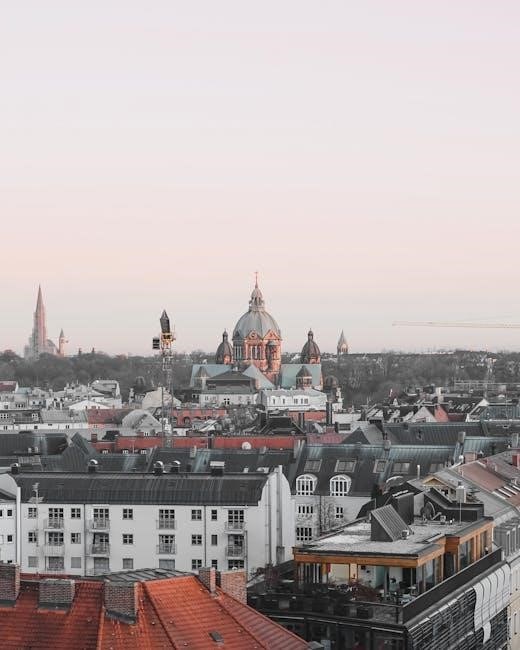
Strategically located in southern Germany, Munich boasts excellent transport links—a major airport and high-speed rail. It’s Bavaria’s capital, influencing German and European politics.
The City of Munich: Location and Infrastructure
Munich, situated in southern Germany, serves as the capital of Bavaria, a state renowned for its economic strength and cultural heritage. The city lies approximately 30 miles north of the Alpine foothills, nestled along the scenic Isar River, which gracefully bisects the urban landscape.
Its infrastructure is exceptionally well-developed, highlighted by Munich Airport, the second-busiest in Germany, providing extensive international connectivity. Complementing this is the high-speed railway network, notably the line to Berlin, reducing travel time to around four hours.
This robust transportation system solidifies Munich’s position as a crucial logistical and economic center within Europe, facilitating the flow of people and goods essential for the Security Conference and beyond.
Munich’s Role in German and European Politics
Munich holds significant weight within German and European political spheres, functioning as a key economic and cultural hub. As the capital of Bavaria, a powerful German state, it frequently influences national policy and debates. The city’s strong industrial base and innovative spirit contribute substantially to Germany’s economic prowess.
Hosting the annual Security Conference elevates Munich’s international profile, positioning it as a central location for high-level diplomatic discussions and strategic policy formulation.
Its influence extends beyond Germany, impacting European Union discussions and fostering collaboration on critical security matters.
Transportation Links: Airport and Rail Network
Munich boasts a highly developed regional transportation system, crucial for hosting the Security Conference and facilitating international access. Munich Airport, the second-largest in Germany, provides extensive global connections, handling significant passenger and cargo traffic.
Complementing air travel, the high-speed rail network offers efficient links to major European cities. The Berlin-Munich line, with a journey time of approximately four hours, is particularly important for delegates traveling from the German capital.
An extensive local public transport network, including U-Bahn, S-Bahn, trams, and buses, ensures seamless movement within the city.
Criticisms and Challenges
Concerns exist regarding accessibility, inclusivity, and the potential for national interests to overshadow broader discussions, creating an “echo chamber” effect within the conference.
Accessibility and Inclusivity Concerns
A recurring critique of the Munich Security Conference centers on its limited accessibility and inclusivity. The highly exclusive nature of the event, with participation largely restricted to governmental and established institutional figures, raises questions about representation.
Critics argue that this selectivity can marginalize voices from civil society, smaller nations, and emerging security perspectives. The lack of diverse viewpoints potentially hinders a comprehensive understanding of complex global challenges.
Efforts to broaden participation and ensure a more inclusive dialogue remain ongoing, but significant hurdles persist in balancing the need for focused discussions with the imperative of wider representation.
Influence of National Interests
The Munich Security Conference, while aiming for impartial security discussions, inevitably reflects the national interests of participating states. Powerful nations often leverage the platform to advance their geopolitical agendas and policy priorities, potentially overshadowing broader collaborative efforts.
This influence manifests in agenda-setting, framing of debates, and the pursuit of bilateral engagements on the conference’s periphery. The inherent tension between collective security goals and individual national ambitions presents a constant challenge.
Acknowledging and mitigating the impact of these competing interests is crucial for maintaining the conference’s credibility and fostering genuine multilateral cooperation.
The “Echo Chamber” Effect
A recurring critique of the Munich Security Conference centers on the potential for an “echo chamber” effect. The concentration of policymakers, experts, and journalists with broadly similar perspectives can reinforce existing biases and limit exposure to dissenting viewpoints.
This homogeneity may hinder truly innovative thinking and prevent a comprehensive assessment of complex security challenges. While diverse participation is encouraged, the conference’s exclusive nature and high-profile attendees can inadvertently create an insular environment.
Addressing this requires deliberate efforts to broaden inclusivity and actively solicit alternative analyses.

The Future of the Munich Security Conference
Adapting to a rapidly changing geopolitical landscape is crucial for the conference’s continued relevance, demanding innovative formats and initiatives in a multipolar world.
Adapting to a Changing Global Landscape
The Munich Security Conference faces the imperative of evolving alongside a dramatically shifting global order. Traditional security frameworks are increasingly challenged by hybrid threats, cybersecurity concerns, and the rise of new power dynamics. Maintaining relevance necessitates broadening participation beyond established Western alliances, actively engaging with emerging economies and diverse perspectives. The conference must foster inclusive dialogue, addressing complex issues like climate change and global health as integral components of security. Furthermore, embracing digital technologies to enhance accessibility and facilitate year-round engagement is vital. Ultimately, the future success of the Munich Security Conference hinges on its ability to anticipate and proactively address the multifaceted security challenges of the 21st century.
Potential for New Formats and Initiatives
Exploring innovative formats is crucial for the Munich Security Conference’s continued impact. Beyond the traditional plenary sessions, smaller, focused workshops could delve deeper into specific challenges like cybersecurity or hybrid warfare. Initiatives promoting Track II diplomacy – informal dialogues involving non-governmental actors – could complement official discussions. Leveraging technology for virtual participation and expanding pre- and post-conference engagement through online platforms would broaden reach. Consideration should be given to regional conferences, extending the Munich model to address localized security concerns. Ultimately, diversifying the conference’s structure and fostering continuous dialogue are key to enhancing its effectiveness.
Maintaining Relevance in a Multipolar World
As the global order shifts towards multipolarity, the Munich Security Conference must adapt to remain influential. This requires broadening participation beyond traditional Western powers, actively engaging rising actors like China and India. Facilitating dialogue between competing blocs is paramount, even amidst geopolitical tensions. The conference should prioritize inclusive discussions addressing diverse security perspectives. Focusing on transnational threats – climate change, pandemics, and terrorism – that transcend national boundaries will enhance its relevance. Strengthening partnerships with regional organizations and fostering a truly global security agenda are essential for sustained impact.

The Vatican’s Involvement
The Vatican historically connected with the conference, hosting a Second Commission Meeting in 1982. This engagement reflects the Holy See’s interest in global peace and security.
Historical Connections to the Conference
The initial association with Munich stems from the infamous 1938 Munich Agreement, a dark chapter of appeasement preceding World War II. However, the modern Munich Security Conference evolved significantly post-war, aiming for constructive dialogue. A notable, yet less publicized, connection involves the Vatican. In 1982, the Vatican hosted the second meeting of a commission related to the conference, demonstrating an early interest in the discussions surrounding international security. This event, documented on the Vatican’s official website (www.vatican.va/19820706 munich en), signifies a historical link beyond the well-known political origins, highlighting the broader scope of concerns that the conference has always addressed.
Second Commission Meeting (1982)
Held on July 6, 1982, the Vatican’s second commission meeting related to the Munich Security Conference marked a unique intersection of religious and geopolitical interests. Details are available via the Internet Archive Wayback Machine (archived August 11, 2015, accessed November 10, 2015). This gathering, though often overlooked in broader conference histories, demonstrates the Vatican’s early engagement with the evolving security landscape. It suggests a desire to contribute to discussions beyond purely political or military spheres, reflecting concerns about peace and international cooperation. The meeting’s documentation, accessible online, provides a glimpse into the Vatican’s perspective during the Cold War era.
Impact and Influence
The conference significantly shapes the global security agenda, fostering crucial dialogue and diplomacy among leaders. It influences policy decisions and addresses pressing international issues.
Shaping the Security Agenda
The Munich Security Conference consistently plays a pivotal role in defining and prioritizing global security concerns. From the rise of ISIS and the Ukraine crisis in 2014-2015, to emerging threats like cybersecurity and hybrid warfare, the conference proactively addresses critical issues. Putin’s impactful 2007 speech marked a turning point, initiating discussions on new global power dynamics.
More recently, the 2020 conference highlighted growing threats, while the absence of Russia since 2022 reflects shifting geopolitical landscapes. The conference’s agenda directly influences international discourse and policy formulation, setting the stage for collaborative efforts to tackle shared security challenges.
Facilitating Dialogue and Diplomacy
The Munich Security Conference serves as a crucial, informal platform for high-level dialogue between governments, international organizations, and key stakeholders. It fosters direct engagement, enabling leaders to address sensitive issues and explore potential solutions outside of formal diplomatic channels. This open exchange is particularly valuable in times of heightened geopolitical tension.
The conference’s format encourages frank discussions, contributing to a better understanding of differing perspectives and promoting trust-building measures. By bringing together diverse actors, it facilitates diplomatic initiatives and lays the groundwork for future cooperation on shared security challenges.
Influence on Policy Decisions
While not a formal decision-making body, the Munich Security Conference significantly influences global security policy. Discussions and debates held during the conference often shape the agenda for subsequent formal negotiations and initiatives. The annual Munich Security Report, a key output, provides in-depth analysis and recommendations that inform policymakers.
The conference’s ability to attract high-level participation ensures that its findings receive attention from governments and international organizations. By highlighting emerging threats and fostering consensus on potential responses, it contributes to the development of more effective security strategies.